Skip to content
“Kakuma's music is like the cradle of humanity all over again.” — Eric Wainaina, Kenyan musical artist

The Story, The Sound

A hidden treasure inside one of the world's largest refugee camps

Nearing three decades old, Kakuma Refugee Camp is home to people from a dozen nations across East and Central Africa — a place so distinct that residents and officials alike describe it as its own country, belonging fully to none of the homelands its people fled.

Within that improvised city lives a largely untold resource: musicians from Congolese, South Sudanese, Sudanese, Burundian, Ugandan, Somali, Ethiopian and other traditions, who gather informally to trade rhythms, instruments and styles, quietly inventing hybrid sounds that have never existed before.

For years these gatherings circulated only as word of mouth among a handful of visiting producers and world-music insiders. Kakuma Sound exists to change that — recognizing the camp's musicians as the daily cultural backbone of the community, and giving them the tools to be heard.
30+
Nationalities Represented
160K+
Camp Residents
~30 yrs
Camp History
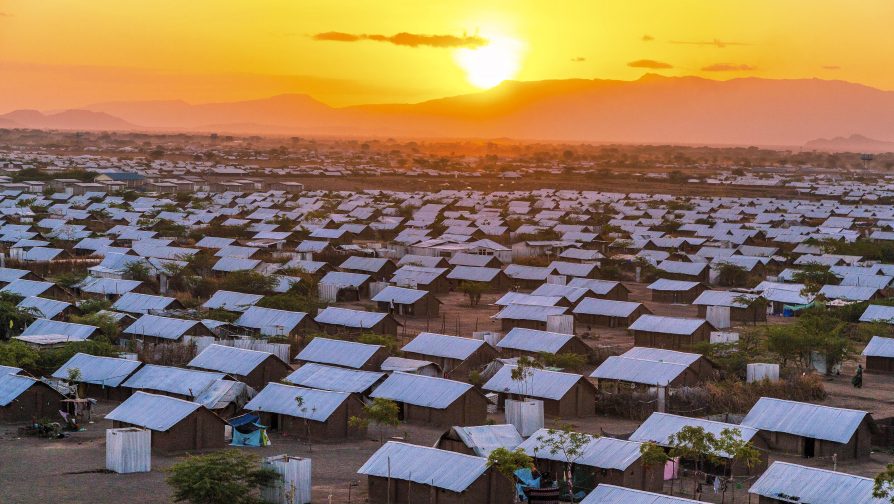
Kakuma Refugee Camp at sunset

What We Do

From instrument to income, in five parts

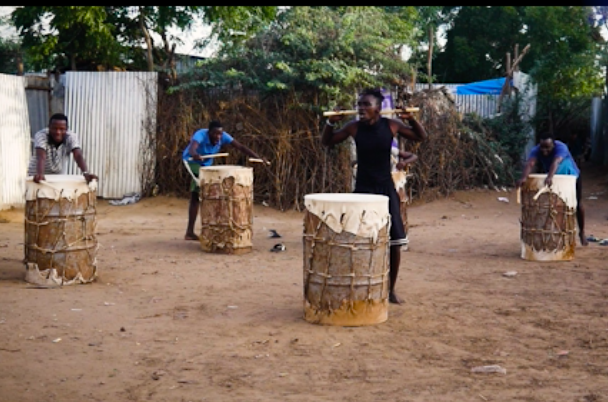
Burundian drummers playing traditional Royal Drums in Kakuma

Source

Instrument sourcing

We fund and transport hand-crafted traditional instruments — like Burundi's Royal Drums — from residents' home regions to the camp.

Musicians training with a master instructor in a Kakuma Sound workshop

Train

Workshops & training

Master musicians from residents' home countries lead hands-on workshops, helping a generation relearn instruments and techniques.

Live recording and performance session in Kakuma Refugee Camp

Record

Recording & production

A camp-based recording studio gives musicians the tools to compose, rehearse and produce a distinct, unmistakably Kakuma sound.

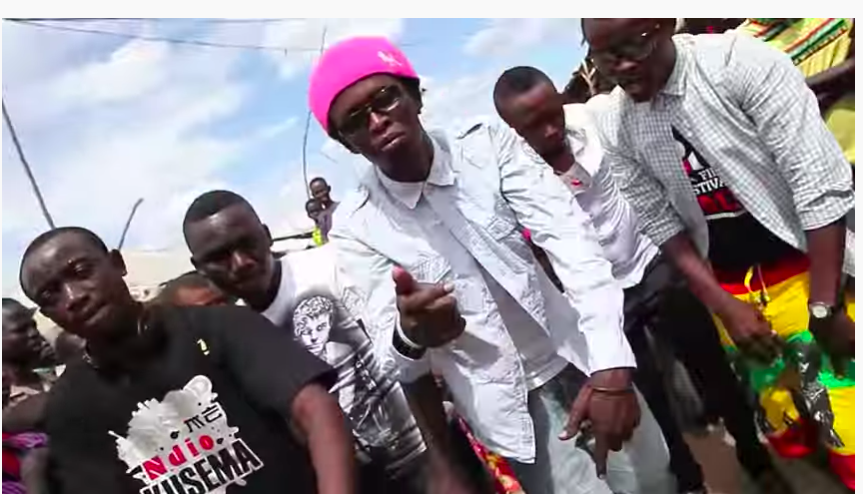
Young rappers and vocalists performing in Kakuma Refugee Camp

Perform

Festivals & performance

From the annual Kakuma Sound Cultural Festival to international stages, we create real audiences for camp musicians' work.

Community members forming the Kakuma Sound Community-Based Organization

Sustain

Community ownership

Every instrument and recording is held in trust by a resident-led Community-Based Organization — never owned by outside agencies.

Kakuma Refugee Camp at sunset, site of Kakuma Sound's expansion

Expand

Regional expansion

New Kakuma Sound branches are taking root in refugee camps in Uganda, Rwanda and Congo, following the same community-owned model.

The Plan

A one-year path from instruments to income

  1. 01

    Source the instruments

    Raise funds with partners, sponsors and volunteers to purchase and transport traditional instruments identified by camp musicians as most essential to their home cultures.

  2. 02

    Rebuild the skills

    Sponsor workshops with master musicians from residents' home countries, helping a generation relearn instruments many haven't touched in decades.

  3. 03

    Define the sound

    Support directed composition, rehearsal and recording so a core group of proficient musicians can shape a distinct, unmistakably Kakuma sound.

  4. 04

    Spread the word

    Bring visiting artists, workshops and festivals to the camp to build awareness across Kenya, East Africa and beyond.

  5. 05

    Build a financial base

    Establish routine, sustainable ways for Kakuma's musicians to earn income directly from their music.

  6. 06

    Take it on the road

    Create regular opportunities for musicians to perform outside the camp — and outside Kenya.

  7. 07

    Open a music school

    Raise funds for a permanent school in the camp, creating jobs and passing skills to the next generation.

The Instruments

Music that made the journey — and music that didn't

Modern instruments — guitars, keyboards, standard percussion — are available in Kakuma, if at a premium. Hand-crafted traditional instruments, tied to specific regions and rarely produced commercially, are almost entirely absent. Their absence quietly weakens residents' ability to hold onto language, ritual and identity.

Partners & Sponsors

Backed by institutions that believe culture is infrastructure

UC Irvine — Alec Glasser Center for the Power of Music & Social Change
UC Irvine Blum Center for Poverty Alleviation
UNESCO
Amnesty International — Hanna Grunwald Fund
Yole!Africa
Collaborative Media Advocacy Platform (CMAP)
John Simon Guggenheim Memorial Foundation
Lutheran World Federation
Danish Church Aid

Kakuma Sound is grateful for the grants, research partnerships and in-kind support that make this work possible. All funding is administered transparently through Kakuma Sound's resident-led Community-Based Organization.

Latest Update

2025–2026 Report: Reactivating heritage in a perilous time

From Culture to Cultivation

Securing water & food

2025 pushed Kakuma Sound to expand beyond music alone, working to secure basic water and food resources alongside cultural programming.

New Partnership

UC Irvine collaboration

A new partnership with the Alec Glasser Center for the Power of Music and Social Change at UC Irvine is expanding research and support.

Full Report

Read the details

Get the complete account of Kakuma Sound's 2025 developments and plans moving into 2026.

Read the full report →

Get Involved

Help put instruments back into the hands of Kakuma's musicians.

Every donation goes toward sourcing traditional instruments, funding workshops with master musicians, and building a self-sustaining music economy inside the camp.

Ownership of instruments & music. This project — and any music, instruments or equipment obtained through it — remains irrevocably and permanently the property of the residents of Kakuma camp, held in trust through a Community-Based Organization (CBO) established to represent their interests. All agreements with agencies or NGOs are conducted with and through that CBO, with full public accounting of funds raised and disbursed.